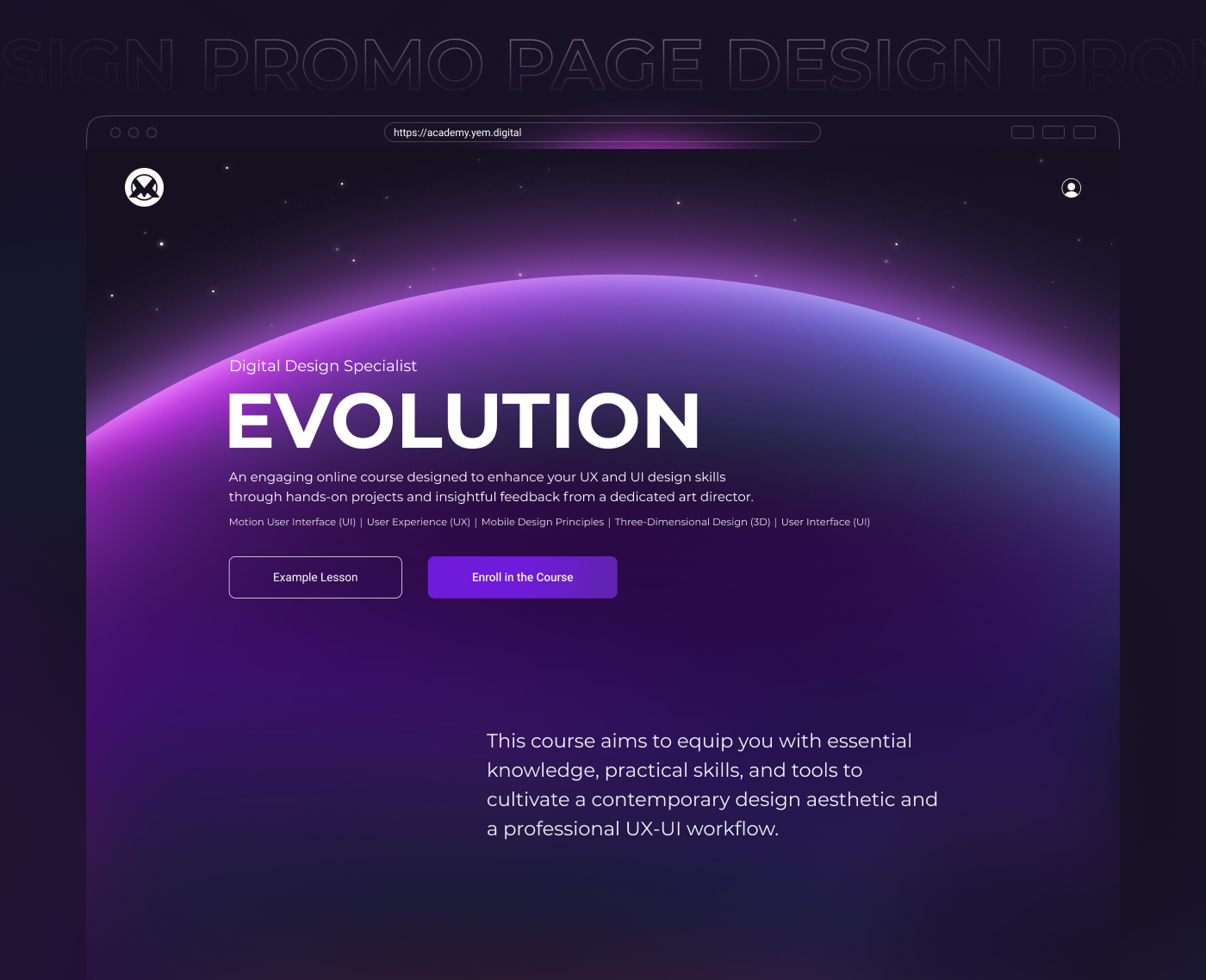
Product and business context
Russian-speaking design schools often marketed a recognizable expert, then delegated practical feedback to junior assistants. That gap weakened the moment students depended on most: understanding mistakes and improving portfolio work.
I positioned the academy around a clear promise—every required assignment would be reviewed by me personally, through as many iterations as the work needed.
My role and decision scope
Founder ownership extended across product, teaching, growth, and operations.
I defined the proposition and curriculum, built the learning platform and automations, produced the acquisition content, sold the course directly, reviewed every assignment, supported students, and managed the business through its final public release.
- Positioning and pricing
- Curriculum and platform
- Content and acquisition
- Sales, mentorship, and operations
The problem
The academy had to scale learning and access without automating away the feedback that created trust.
Live cohorts repeated the same teaching, delayed enrollment, and consumed time that could create more value in feedback, sales, and content.
The central product constraint was structural: personal review differentiated the offer, but also tied capacity directly to one founder’s time.
Three important decisions
The choices that most clearly show the product judgment behind the work.
- 01
Build an independent product when partnership incentives conflicted.
An initial school partnership validated demand but left the offer constrained by someone else’s economics and positioning. I created an independent academy and owned the complete customer journey.
A validated offer still needs a viable operating model. - 02
Automate repeated teaching work, not the reason students chose me.
I converted the strongest live lessons into a structured asynchronous curriculum and automated access and progression. Every required assignment still received my personal review.
Automate repetition while protecting differentiated value. - 03
Limit growth instead of breaking the trust promise.
Adding junior reviewers could have increased capacity, but the product was sold around direct accountability. I kept enrollment at a level I could serve responsibly.
Growth is not success when it violates customer trust.
What shipped
- A 21-lesson curriculum built around practical assignments and portfolio outcomes
- An asynchronous learning platform with accounts, gated progression, and homework workflows
- CRM, lead notifications, access automation, subscriptions, and progress tracking
- A direct sales journey connecting educational content, consultation, purchase, and access
- A YouTube-led acquisition engine with tutorials, workshops, reviews, and course content
- A final free public course when the paid operating model became unsustainable
Results and evidence
- 150+
- paid students
- 34K+
- YouTube subscribers
- ≈1.8M
- channel views
- ≈$67K
- lifetime revenue
Founder-reported business results. Approximately 47% completed the demanding core curriculum; at least 20% of known completers secured a full-time design role within one year.
What I learned
Distribution, delivery, and trust were one product system—not separate functions.
YouTube, workshops, landing pages, sales conversations, curriculum, platform access, and personal review formed one connected journey. Improving only the course would not have created the business.
The same differentiation that earned trust also capped growth. Closing the paid service and making the course public reinforced a later lesson: how a product ends is also a product decision.
Want the decisions, flows, and evidence in detail?
The full case contains the complete product story, supporting visuals, and the reasoning behind the work.